US F-22, F-35 fighter jets land in Israel amid escalating tensions between US, Iran: Reports
Fighter jets such as F-35s, F-22s, F-15s, and F-16s were spotted heading to the Middle East in recent days by the Military Air Tracking Alliance.
The F-35 remains among the world’s most sophisticated and expensive combat aircraft platforms, with individual variants costing well above USD 100 million.




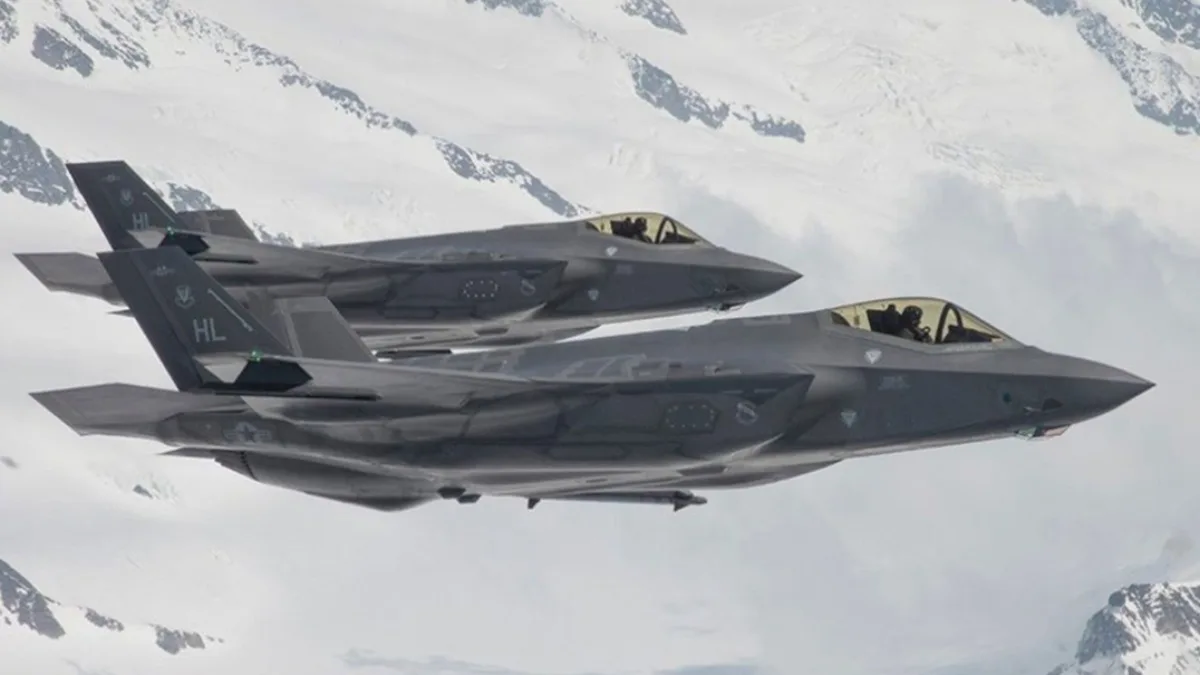
US unleashes $1 billion F-35 war upgrade amid rising global tensions and electronic warfare race. (ANI)
The United States has unveiled a massive modernisation programme for its fleet of F-35 Lightning II stealth fighters, rolling out a nearly USD 1 billion contract focused on advanced electronic warfare upgrades and next-generation combat enhancements for hundreds of aircraft operated by both American forces and allied nations.
The deal, awarded to Lockheed Martin, marks one of the largest recent capability enhancement programmes for the fifth-generation fighter platform as Washington accelerates efforts to strengthen air dominance amid growing geopolitical instability and evolving battlefield threats.
Advertisement
Under the newly announced contract, modification kits will be supplied for 432 F-35 aircraft across multiple military branches and international partner fleets. The package includes upgrades for fighters operated by the US Air Force, US Navy and US Marine Corps, along with aircraft supplied to foreign military customers and partner nations participating in the Joint Strike Fighter programme.
Advertisement
The modernisation effort forms part of the F-35’s expanding Block 4 upgrade architecture, a long-term enhancement programme designed to significantly improve the aircraft’s combat survivability, targeting precision, electronic attack capabilities and missile carrying capacity.
Defence officials and industry analysts view the Block 4 package as a major leap in the operational evolution of the stealth fighter, which is increasingly becoming the backbone of allied fifth-generation air combat operations across Europe, the Indo-Pacific and the Middle East.
A major focus of the retrofit programme is expected to be the strengthening of the fighter’s electronic warfare systems, particularly enhancements linked to the AN/ASQ-239 suite developed by BAE Systems.
The existing system enables the aircraft to detect, analyse and counter hostile radar and missile threats while operating in heavily contested environments. It also provides integrated targeting support, electronic attack functions and defensive countermeasures designed to protect pilots during high-risk missions.
The upcoming modifications are expected to improve sensor fusion performance, increase situational awareness and enhance the aircraft’s ability to survive inside dense electronic warfare environments where enemy radar tracking and air defence systems pose significant risks.
The timing of the modernisation programme has drawn particular attention amid rising tensions around the Strait of Hormuz, one of the world’s most strategically sensitive maritime corridors.
Recent reports indicating that F-35 aircraft operating near the Gulf had transmitted emergency transponder code 7700 have further intensified focus on regional military activity and operational preparedness. Although no official link has been established between those incidents and the upgrade programme, the developments have highlighted the increasing pressure on advanced combat aircraft operating in volatile zones.
The F-35 remains among the world’s most sophisticated and expensive combat aircraft platforms, with individual variants costing well above USD 100 million. More than 19 countries are currently operating or preparing to induct the stealth fighter into service as part of broader military modernisation efforts.
The electronic warfare retrofit and capability enhancement programme is expected to continue through March 2032, reflecting Washington’s long-term commitment to maintaining technological superiority in future air combat operations.
The latest upgrade push signals a broader strategic shift by the United States and its allies toward preparing for increasingly complex conflicts involving advanced missile systems, electronic warfare networks and contested airspace environments.
Advertisement